01
Full-grain leather
Leather that retains the outer grain surface of the hide rather than having it corrected away.
Used where the material itself is a large part of the product: belts intended to be seen and handled, and small leather goods.
Leather belt manufacturing
A belt is the most exposed accessory a brand makes. It is handled every day, and every shortcut in its construction is felt rather than seen.
Northvale manufactures leather and webbing belts in the UK for fashion brands, retailers, boutiques, trade customers, uniform and workwear suppliers, independent labels and its own collections — covering cutting, strapping to width, skiving, edge finishing, punching, riveting, buckle fitting, hardware attachment and branding.
01 Anatomy
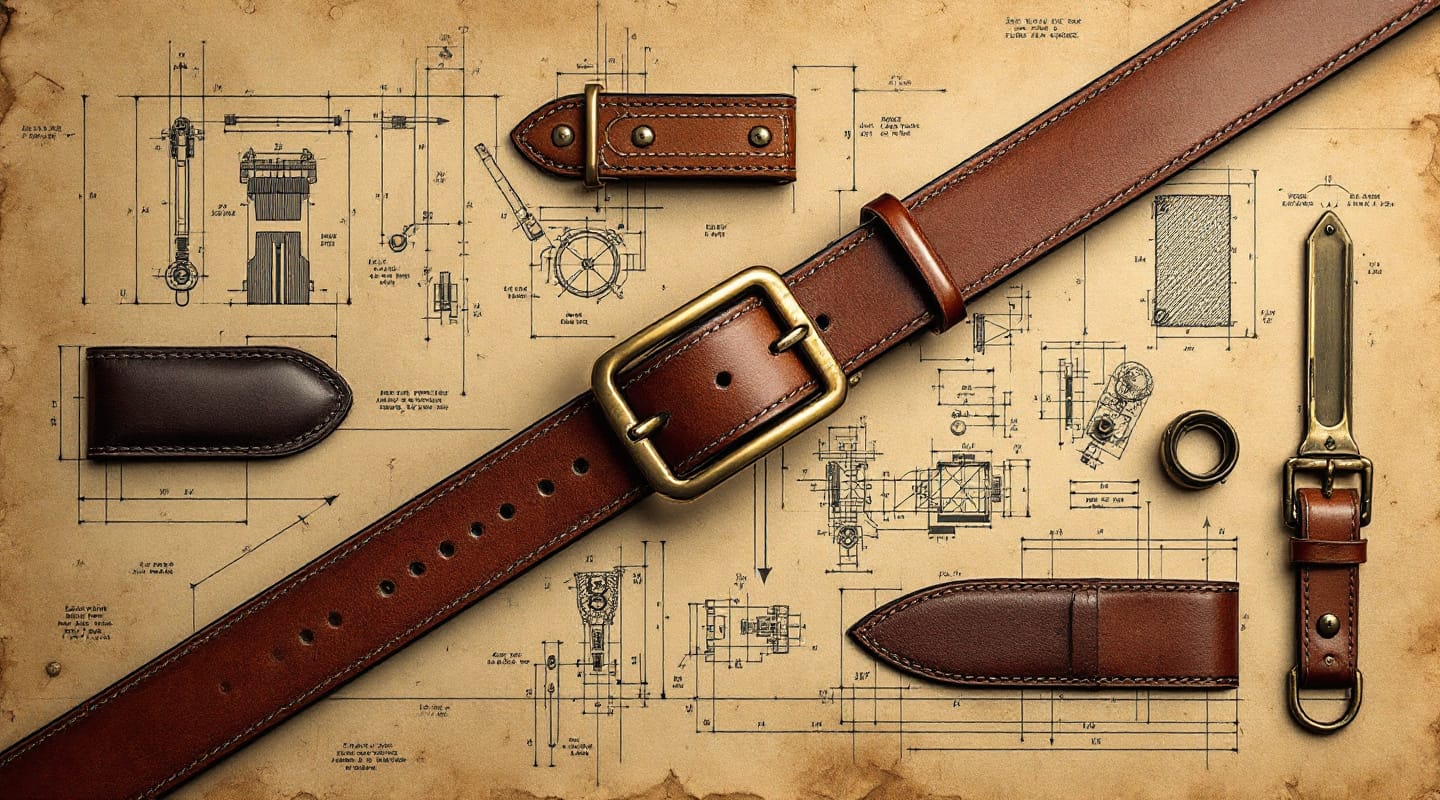
Seven parts, each of which changes how the finished belt behaves. The diagram below is a conceptual construction study — it carries no dimensions, because on a real project every measurable property is set by the specification.
Conceptual construction study — no dimensions implied
02 Process
The route a belt takes across the bench. Each stage is a decision point, and each one is checked against the written requirement rather than judged by eye.
Hide cut for the run, reading grain and marking.
Strapped to the width set by the specification.
Reduced where the strap returns around the bar.
Edge prepared and finished along its length.
Holes set to the agreed position and count.
Keeper, buckle and fastening fitted.
Embossed or foiled in the agreed position.
Checked against the agreed specification.
03 Material
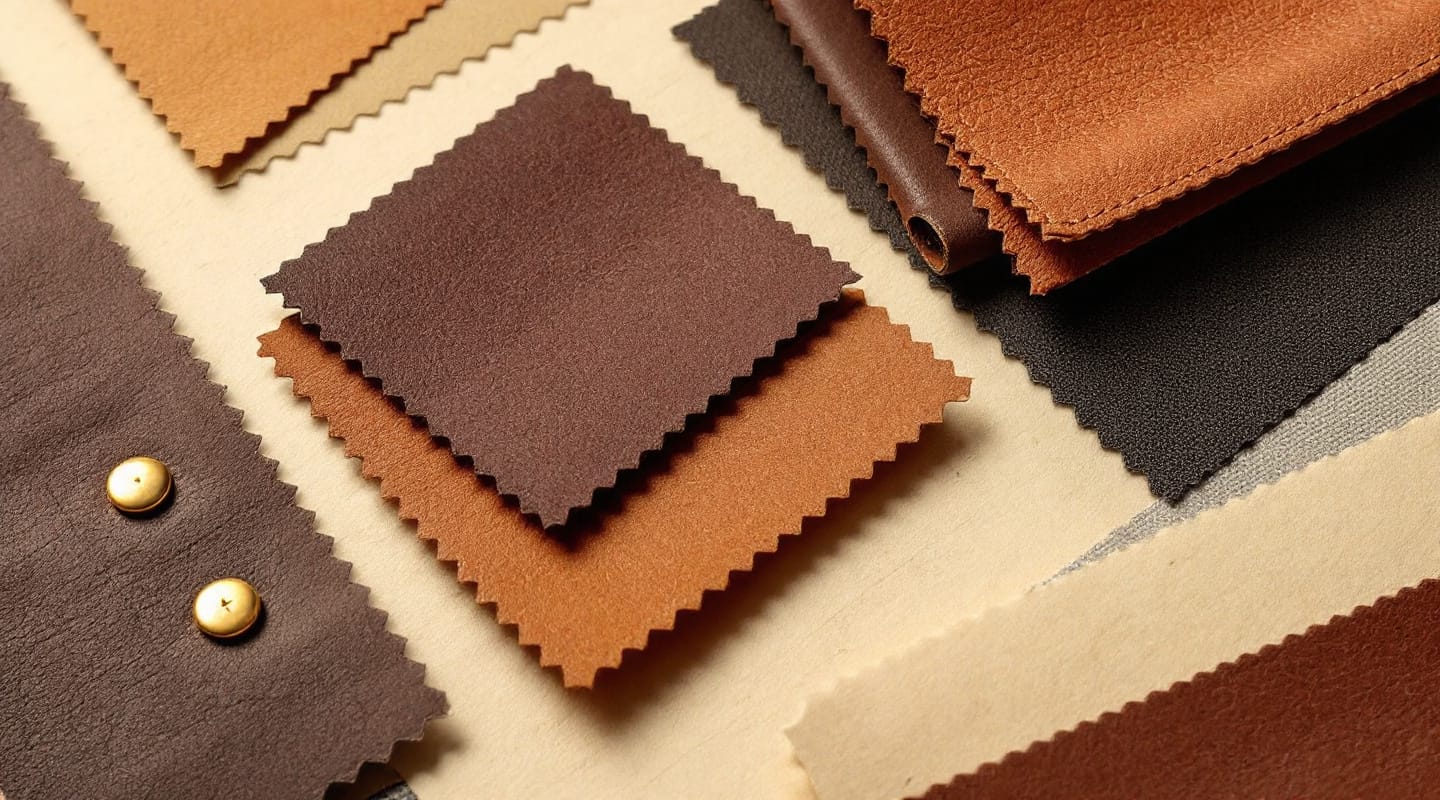
The material decision is the product decision. It sets the character, the way the belt takes a finish and how it will look after a year of use.
Leather that retains the outer grain surface of the hide rather than having it corrected away.
Used where the material itself is a large part of the product: belts intended to be seen and handled, and small leather goods.
The lower layer separated from a hide once the grain layer has been split away.
Used where a more even appearance or a different surface character is wanted across a range, including linings and backing layers.
Leather tanned using tannins rather than chromium salts.
Often selected where a structured strap and a material that develops with wear are part of the intended product character.
Leather tanned using chromium salts, the most widely produced tannage.
Used where a softer hand, a particular colour direction or a more consistent finish is required across a range.
A manufactured material produced from bonded leather fibre with a surface layer applied.
Selected where consistency of appearance across a run is the priority for the intended product and commercial position.
Woven textile strapping supplied as a belt and accessory material.
Commonly used for uniform, workwear and casual belt programmes, and where a non-leather strap is specified.
04 Specification
This website deliberately publishes no default widths, thicknesses, hole spacings or tolerances. Those belong to a specification, agreed with you, for a specific product.
That is not evasiveness — it is how belt manufacturing actually works. A 30 mm dress belt in vegetable-tanned leather and a webbing belt for a uniform programme share almost nothing except the word "belt". Publishing a house standard would be inventing one.
Format / Belt
Belt — specification headings
Rev —
Illustrative specification format — not a quotation or commitment
05 Applications
Brand-led belts where the material, hardware reading and branding position carry the range.
ExploreRepeatable specifications supplied to trade customers and retailers over time.
ExplorePractical leather and webbing belts built around a commercial requirement.
ExploreSmaller collections for independent labels and specialist products.
ExploreManufacturing enquiry
Material, width, hardware, edge, branding, size range and quantity — tell us what you know and we will work through the rest.